Elizabeth Borelli
Interested in learning more about Mindful Mediterranean diet and lifestyle? Click here for free Mediterranean Lifestyle resources and recipes. Click here for exciting upcoming events!
February 14, 2022
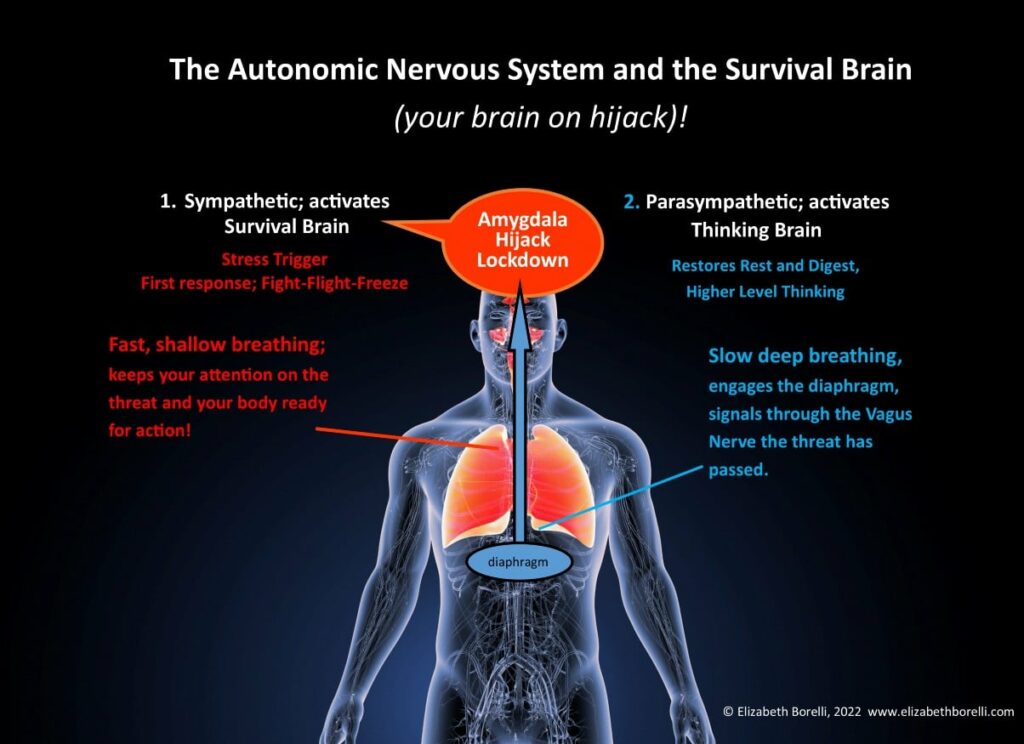
The mind and body are in constant communication, when we’re tuned in, we can manage this conversation, moving out of the natural survival state of negative bias and opening to new possibilities.
It’s natural to assume our feelings develop from the thinking brain, and that they’re logical, rational and accurate. But that’s a whole lot to expect, no matter how smart you are. After all, thoughts are not purely logic-based. Your body has a major influence on how you feel, which affects the way you think.
When you’re hungry, it’s easy to become “hangry”, when you’re tired, it’s hard to feel enthused. And when you’re stressed? Your body responds as your system shifts to prepare to fight, fly or freeze. When your body is sending stress signals, your thinking brain is subsumed by the fear response. So even though you’re not in immediate danger, it’s hard to focus, relax, or stay energized. Even if the stressor is your partner, your job, or the morning news.
Luckily there is another pathway, a more direct channel we can use to move our minds from a stressed state into a more balanced perspective. It’s the nerve known as the vagus, and it connects the organs with the senses as it passes information back and forth to make sure you’re safe and connected.
The vagus nerve is a central communications channel between the brain and body, extending from what’s known as the gut-brain axis, the brainstem down into your stomach and intestines.
The vagus nerve plays an important role in the gut-brain axis, affecting not only your mood but has also been implicated in the development of depression and anxiety. Another study, published in the same journal, noted that vagus nerve stimulation may be an additional therapy for treatment-resistant depression and post-traumatic stress disorder. (Of course, these exercises are not a substitute for treatment your provider has recommended for you.)
When you’re caught up in your emotions; anxious, angry, or shut down from stress, you can access the vagus nerve, using a combination of breathwork and simple movement practices.
It may not surprise you to learn that conscious breathing, especially practices that engage the diaphragm, is the top recommendation for accessing the vagus nerve and intercepting a stress response. Here are 3 simple methods for tapping into this amazing resource:
Your mindset is critically dependent on the state of your sensory input. Understanding this relationship takes time. Developing greater conscious awareness of our internal experiences which are both a result of our external environment and internal biological dynamics.
While we can’t always influence the external environment, each one of us has the tools we need to build our internal awareness and tap into our natural state of calm.
For more on the amygdala hijack, click here!
Connect with me on LinkedIn!